
Last Updated on 16 marraskuun, 2026 by Ideal Editor
🌍 COP31 Antalya Summit 2026 Recap: Key Developments, Climate Commitments and What the World Can Expect
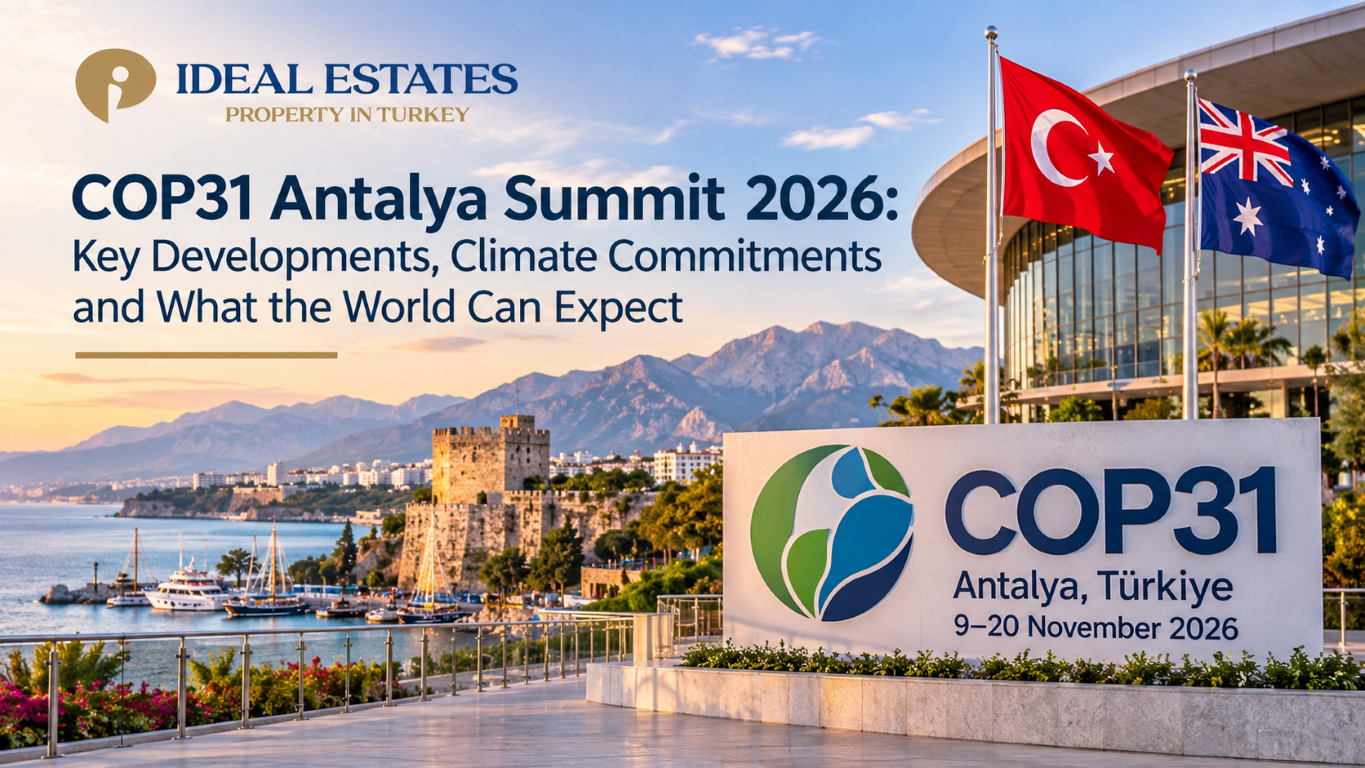
The 31st United Nations Climate Change Conference (COP31) is taking place in Antalya, Türkiye, from 9 to 20 November 2026, bringing together world leaders, climate negotiators, policymakers, scientists, businesses and environmental organisations. The summit focuses on turning international climate commitments into practical action, with particular attention to climate finance, clean energy, emissions reduction and climate resilience. As of 16 November, negotiations are entering their final phase. Final agreements have not yet been confirmed. This is a COP31 Antalya Summit 2026 Recap as of the 16th of November.
🌐 Türkiye and Australia Lead an Unprecedented COP31 Partnership
One of the defining features of COP31 is its joint leadership arrangement.
- 🇹🇷 Türkiye: Host country and COP presidency.
- 🇦🇺 Australia: Leads the formal negotiations.
- 🤝 International cooperation: Joint efforts to achieve meaningful climate commitments.
This partnership aims to strengthen international cooperation and bridge differences between participating countries.
⚡ Energy Transition and the 35-by-35 Electrification Pledge
Energy transition is one of the major priorities of COP31.
The 35-by-35 Global Electrification Pledge aims to increase electricity’s share of global final energy consumption from approximately 23% to 35% by 2035.
Key areas include:
- 🚗 Electric transportation and mobility.
- 🏠 Electrification of residential and commercial buildings.
- 🏭 Cleaner industrial production.
- 🔋 Renewable electricity and energy infrastructure.
💰 Climate Finance Remains a Major Negotiating Challenge
Climate finance is one of the most contentious issues at COP31.
Developing countries need substantial financial support to reduce emissions and strengthen climate resilience.
Key priorities include:
- 💵 Mobilising additional climate finance.
- 🌍 Supporting developing and vulnerable countries.
- 🌱 Increasing adaptation funding.
- 🏚️ Addressing climate-related loss and damage.
- 🤝 Improving access to clean technologies.
🛢️ Fossil Fuel Transition and Emissions Reduction
The transition away from fossil fuels remains a major challenge for international climate negotiations.
Key discussion areas include:
- ☀️ Accelerating renewable energy adoption.
- 🌿 Reducing greenhouse gas emissions.
- 🛢️ Developing fossil fuel transition strategies.
- 👷 Supporting workers affected by energy-sector changes.
- ⚡ Encouraging investment in clean energy.
Countries remain divided over how strongly fossil fuel phase-out should feature in the final agreement.
🌡️ Climate Adaptation and Loss and Damage
Climate adaptation is essential as countries experience increasingly severe climate impacts.
COP31 is addressing:
- 🌊 Flood prevention and water management.
- 🔥 Wildfire and extreme heat preparedness.
- 🌾 Food and agricultural security.
- 🏗️ Climate-resilient infrastructure.
- 🚨 Early-warning systems.
- 💰 Financial support for vulnerable communities.
📊 The Second Global Stocktake: Measuring Progress Towards Climate Goals
COP31 is significant because it marks the beginning of the second Global Stocktake process under the Paris Agreement.
The process evaluates collective progress towards international climate objectives.
Important areas include:
- 🌍 Progress towards the Paris Agreement temperature goals.
- 🌡️ Limiting global warming.
- 📉 Reducing greenhouse gas emissions.
- 🌱 Strengthening climate adaptation.
- 💡 Expanding financial and technological support.
🏛️ COP31 Enters Its Final Week: What Happens Next?
As of 16 November 2026, COP31 has entered its final negotiating phase.
Key developments and priorities include:
- 📄 Draft agreement: Negotiators are working towards an overarching decision.
- 💰 Climate finance: Resolving disagreements over funding.
- ⚡ Energy transition: Discussing electrification and fossil fuel commitments.
- 🌱 Climate adaptation: Strengthening resilience measures.
- 🤝 International consensus: Reaching agreement on outstanding political issues.
The summit is scheduled to conclude on 20 November 2026.
🌏 Overall Assessment: What Does COP31 Mean for Global Climate Action?
COP31 in Antalya represents an important opportunity to advance international climate diplomacy.
Its priorities reflect the urgent need for practical action on renewable energy, electrification, climate finance and climate adaptation.
Türkiye’s role as host also creates an opportunity to strengthen its position in international environmental diplomacy.
The central question for COP31 is no longer simply whether countries recognise the climate crisis, but whether they are prepared to take measurable action to address it.
❓ Frequently Asked Questions (FAQs) About COP31 Antalya 2026 Summit Recap
🌍 1. What is COP31 and where is it being held? COP31 is the 31st United Nations Climate Change Conference. The 2026 summit is being held in Antalya, Türkiye, from 9 to 20 November 2026.
🇹🇷 2. Why is Türkiye hosting COP31? Türkiye is hosting COP31 to strengthen its role in international climate diplomacy and promote cooperation on renewable energy, climate resilience and sustainable development.
🌱 3. What are the main topics being discussed at COP31? The main topics include renewable energy, fossil fuel transition, climate finance, greenhouse gas emissions, climate adaptation, loss and damage, and implementation of the Paris Agreement.
⚡ 4. What is the 35-by-35 Global Electrification Pledge? It is an initiative promoted by Türkiye that aims to increase electricity’s share of global final energy consumption from approximately 23% to 35% by 2035.
📅 5. When will COP31 conclude, and what outcomes are expected? COP31 is scheduled to conclude on 20 November 2026. Expected outcomes include progress on climate finance, adaptation, energy transition and international climate cooperation. Final agreements remain pending as of 16 November.